Active Aging in Ontario
Navigation
Staying Active and Engaged After Retirement
Retirement changes your daily structure, and for many people, the biggest challenge is not boredom but finding a sustainable rhythm. The routines that kept you active during your working years vanish overnight. Replacing them with something meaningful takes intention, and the community you live in plays a significant role in whether that happens naturally or becomes a constant effort.
Active aging is not about running marathons or joining a gym, although those are fine if they suit you. It is about building a life where movement, connection, and engagement are part of your daily routine rather than something you have to force. A morning walk to a coffee shop, a weekly volunteer shift at the library, a Thursday afternoon curling league, a garden plot at a community allotment. These are the patterns that keep people healthy, purposeful, and connected.
Ontario's smaller communities often have more to offer in this regard than people expect. Towns like Collingwood and Orillia have extensive trail networks, waterfront paths, and well-maintained parks. Smaller places like Perth and Cobourg have active arts councils, community theatres, and seasonal festivals that create regular opportunities to participate in something beyond your own household.
Physical Activity and Recreation
Most Ontario towns of any size have a community centre with programming aimed at older adults. This often includes fitness classes, swimming, pickleball, and walking groups. The quality and variety of programming depends on the municipality, but many communities have invested significantly in recreation infrastructure over the past decade.
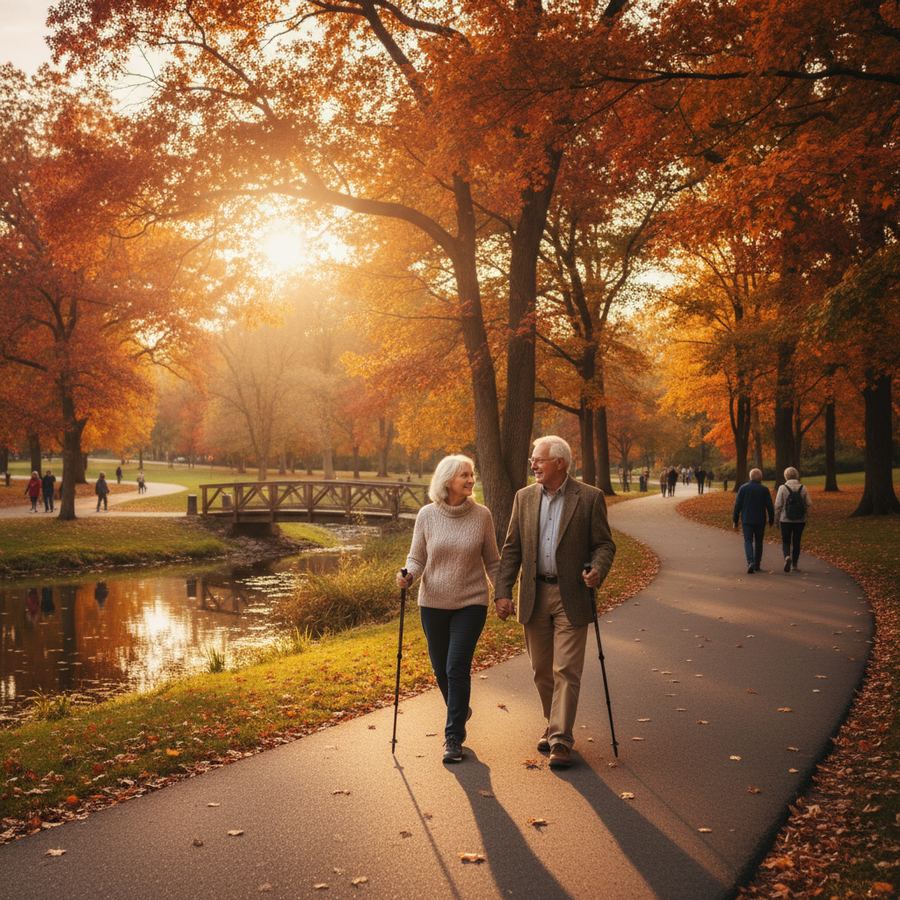
Walking and cycling trails are increasingly common even in smaller towns. The Trans Canada Trail passes through or near many of the communities we profile, and local trail networks often connect residential areas to downtown cores, waterfronts, and parks. For people who prefer structured exercise, many towns have private gyms and yoga studios alongside municipal facilities.
Winter recreation is worth thinking about carefully. Ontario winters are long, and staying active from November through March requires some planning. Communities with indoor pools, arenas, and well-maintained indoor walking tracks have a real advantage. Cross-country skiing and snowshoeing are available in most areas, but they require a baseline level of fitness and comfort with cold weather.
Social Connection and Community Life
Physical health and social health are closely connected, and isolation is a genuine risk for retirees who relocate to a new community. The best way to build a social network is through regular participation in something: a club, a class, a volunteer commitment, a faith community. Towns with active community calendars make this easier.
Libraries are often the social hub of smaller Ontario towns. They host book clubs, conversation groups, computer classes, and guest speakers. Many also serve as informal gathering places, especially for people who live alone. A good library is a signal that a community invests in the social infrastructure that older adults rely on.
Volunteer opportunities are abundant in most small towns, partly because small towns depend on volunteers to keep things running. Hospital auxiliaries, service clubs, food banks, heritage organizations, and municipal committees all need people. Volunteering is one of the fastest ways to meet people and feel useful in a new community.
Arts, Culture, and Lifelong Learning
Many Ontario communities have surprisingly active arts scenes. Community theatres, galleries, music festivals, and writing groups are common in towns that attract retirees. Some communities, like Cobourg and Perth, have year-round cultural calendars that provide regular events and performances.
Lifelong learning is available through community college satellite campuses, continuing education programs, and informal classes organized by seniors' centres and libraries. Some retirees audit university courses online while living in a small town, combining the advantages of a low-cost community with access to academic programming.
Planning an Active Retirement
If staying active and engaged is a priority for your retirement, consider these things when evaluating a community:
- Is there a community centre with programming for older adults?
- Are there walking trails accessible from residential areas?
- Does the town have a library with regular events and programs?
- Are there indoor recreation options for the winter months?
- Is there a volunteer culture that welcomes newcomers?
- Are there arts, music, or cultural organizations you could join?
For a closer look at specific communities, browse our community profiles. Our article on moving to a smaller town after retirement also covers the social transition in more detail. The Government of Canada's Aging and Seniors page provides additional resources on healthy aging.